The Corkboard at the Checkout: How UK Asian Grocers Became Fandom’s Meeting Point
On a wet Tuesday in Manchester, the most sociable square foot of the high street is not a coffee shop or a co-working space. It is a corkboard beside the till in a Korean grocer, wedged between a stack of free newspapers and a handwritten sign about a bulk-buy discount on rice. Someone has pinned a flyer for a K-pop dance class in Salford. Someone else has left a card advertising a Japanese conversation circle in a library upstairs. A third note, slightly curling at the corner, asks whether anyone is going to the anime screening on Friday and would like to split a taxi.
This is not a niche quirk. Across the UK, Asian supermarkets — Korean, Japanese, Chinese, and the wonderful hybrids that stock a bit of everything — have become the unofficial fandom desk of the high street. They are where you go for gochujang and leave with a phone number for a language exchange. Where the queue moves slowly because someone is asking the staff whether the new mini-album is in yet. Where the free newspapers by the door are read not just for news but for listings, and where a handwritten index card can do more for local fandom than a month of algorithmic recommendations.
First, Follow the Free Newspapers
Most of these shops have a stack of free papers near the entrance: Korean weeklies, Japanese community newsletters, Chinese-language classifieds. They are often picked up by people who are not fluent, or not fluent yet, and who use them as a low-pressure way to practise reading in public. But they also carry the kind of listings that never make it to mainstream event sites — a taiko drumming workshop in a church hall, a call for stallholders at a Lunar New Year market, a note about a new manga café opening near the bus station.
The shelves themselves do a similar job. Staff picks are rarely just about food. A card under a particular brand of instant noodles might say “new arrival” or “staff favourite”, but it might also say “this is the one you want for tteokbokki night”. In a Japanese grocer in Birmingham, a small sign once recommended a specific brand of curry roux for people “cooking for one and not sure where to start”. That is not marketing. That is concierge work.
The Handwritten Economy
But it is the noticeboard that does the heavy lifting. The best ones are gloriously low-fi: a cork tile, a few drawing pins, a laminated “please ask before pinning” note that has seen things. You will find dance-class ads with tear-off phone numbers. You will find zine swaps, fan meetup announcements, and the occasional request for a roommate who “understands that I will be watching music shows on a Friday night”.
What makes these boards work is their scale. A flyer for a fan meetup in a pub back room is not trying to reach the whole internet. It is trying to reach the person who already knows which bus goes to New Malden. It is trying to reach the student who has just moved to Leeds and does not yet know where to buy good kimchi, let alone where to find people who will talk about their favourite group for three hours. The noticeboard is a local filter, and it is surprisingly good at it.
Some shops lean into this. A Chinese supermarket in Glasgow keeps a small shelf of free zines and community magazines near the till, next to a stack of local event guides. A Japanese grocery in London has a dedicated spot for language-exchange cards, separated from the food adverts so you can find them without squinting. None of this is official fandom infrastructure. It is just shopkeeping with an eye for what the regulars actually need.
What the Tills Hear
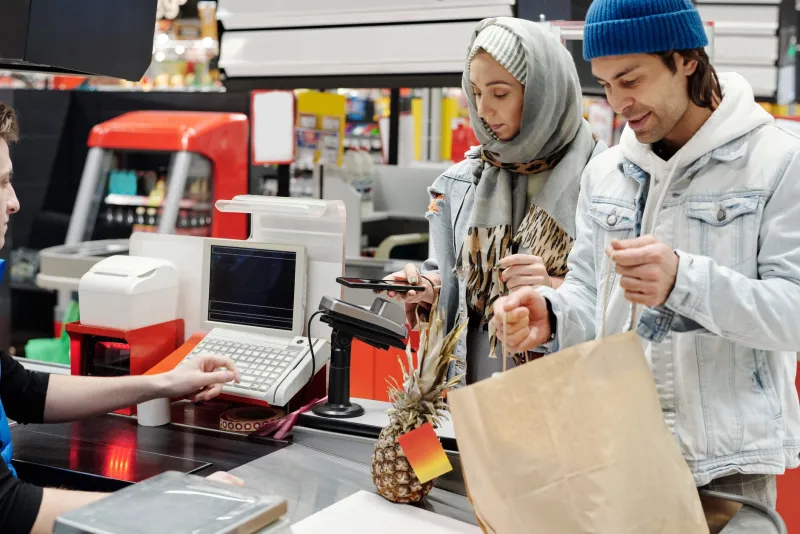
Staff at these shops become accidental concierges. They are asked where to find a specific brand of chilli paste, yes, but also whether the new album is in stock, whether the shop will be open on a bank holiday, and whether they know of anywhere showing the football at a reasonable hour. The queue is a forum. The till is a help desk. The person behind it is often the first person a new arrival talks to about anything beyond groceries.
That matters. For plenty of fans, especially younger ones or those who have moved to a new city, the supermarket is a safer first step than a dedicated fan event. You can go in for a packet of noodles and leave with a flyer. You can ask a question without committing to a whole evening. You can be anonymous, or not, depending on your mood. The shop does not demand that you perform your fandom. It just leaves the door open.
From Snack Run to Scene
This is how small scenes grow. Not always through big conventions or viral posts, but through the slow accumulation of paper and conversation in places people already go. A dance class finds its first five students through a card by the till. A zine finds its first readers on a shelf next to the free newspapers. A fan meetup finds a venue because someone asked the shop owner if they knew a café that would stay open late.
As Christmas 2026 approaches, the boards are filling up again with seasonal events: market stalls, end-of-year parties, and the inevitable “does anyone want to go halves on a bulk order of snacks for a watch party”. It is not glamorous. It is not scalable. But it is real, and it is local, and it is happening on a corkboard next to the till.
A Note for the Shy
If you are new to this, the etiquette is simple. Ask before you pin. Buy something, even if it is small. Do not block the aisle while you read every card. Take a photo of the flyer rather than the whole board, so the next person can see it too. And if you see a card that looks interesting, take a tear-off strip. That is what they are for.
The next time you pop in for instant noodles, give the board a minute. You might find a language exchange, a dance class, a zine, or just a note from someone who is also looking for people to watch music shows with on a Friday night. The high street has been accused of many things, but being useful is not usually one of them. Here, at least, it still is.