The 5K With a Beat: Britain’s K-Pop Run Crews Are Rewriting the Saturday Morning
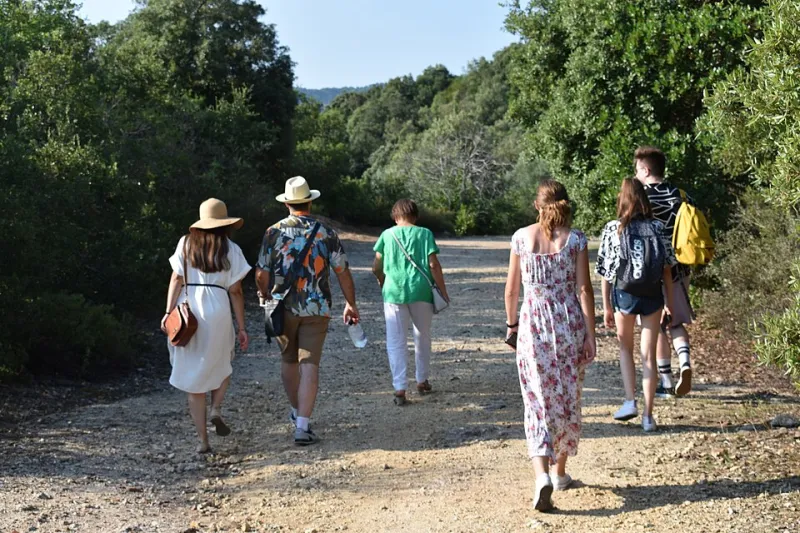
Photo: Altitonantis, CC0, via Wikimedia Commons
Saturday morning, 9am, a council park somewhere between a leisure centre and a retail park. A speaker is clipped to someone’s belt. The first few bars of a Stray Kids track crackle across the tarmac, and a loose cluster of people in running shoes, bucket hats and the odd oversized tour tee starts moving. This is not a race. It is not quite a parkrun either, although it borrows the same energy. It is a K-pop run club, and it is becoming one of the most quietly sociable corners of British Hallyu.
Across London, Manchester, Birmingham, Glasgow, Leeds and Bristol, informal running crews are putting K-pop at the centre of their weekly meet-ups. Some are spinoffs from existing fandom group chats. Others grew out of the post-pandemic run-club boom, when people who had spent too long indoors discovered that a shared route was an easier way to make friends than a crowded bar. The K-pop version adds a simple twist: the playlist is the pacemaker.
The playlist is the pacemaker
Most of these clubs are not chasing personal bests. Organisers describe a familiar format: a warm-up, a 5K route that loops back on itself, and a cool-down that usually involves coffee, a phone speaker and somebody’s recommendations for the next release. The music does the heavy lifting. A high-BPM stretch of ATEEZ or aespa carries the first kilometre. A NewJeans or LE SSERAFIM chorus lands just as the group hits the incline. The final stretch is reserved for something ridiculous and uplifting — the kind of song that makes you forget you are wearing a waterproof jacket in a British drizzle.
‘We are not a running club that happens to like K-pop,’ says one organiser in Manchester, who started a Saturday crew after a group chat kept saying they wanted to meet up but never did. ‘We are a K-pop group chat that accidentally learned to run. The playlist is the whole point. If the song is right, people keep going. If the song is wrong, we all have a laugh and walk for a bit.’
The result is a softer kind of fitness space. Running culture can be intimidating: the jargon, the splits, the unspoken hierarchy of expensive shoes. K-pop run crews tend to flatten that. You will find experienced runners, complete beginners, people who mostly walk, and people who have come for the social bit and are treating the 5K as a light suggestion. Nobody gets dropped. Nobody is asked for their pace. The only real rule is that the speaker stays audible and the vibe stays friendly.
How a group chat becomes a Saturday morning
Most crews start small. A fan account posts a poll. Somebody suggests a park. A route is shared on a messaging app. The first meet-up attracts six people and one very brave organiser with a backpack full of bottled water. By the third week, there are fifteen. By the end of the month, someone has made a logo in Canva and somebody else has started a spreadsheet.
The British context matters here. The UK already has a strong culture of organised weekend runs, from parkrun to charity 5Ks, and the infrastructure is ready-made: public parks, canal towpaths, riverside paths, the same loops that dog walkers and cyclists use. K-pop crews are not reinventing the wheel. They are adding a fandom layer to a format that already works. It helps that most cities have a decent park within reach, and that the post-run café stop is a British institution in its own right.
There is also a practical appeal. Fandom meet-ups can be expensive: concerts, pop-ups, travel, merch. A run club costs nothing beyond the shoes you already own and the coffee you probably would have bought anyway. It gives people a reason to be in the same place at the same time without the pressure of a big event. For fans who are new to a city, or who find large gatherings overwhelming, that low-stakes regularity is the draw.
No one gets dropped
Ask organisers what they want the clubs to be, and the answer is rarely about fitness. It is about belonging. One London crew describes itself as ‘a walking group with delusions of athleticism’. A Glasgow group ends every run with a five-minute playlist swap. In Birmingham, a Saturday morning crew has become a de facto support network: people share job leads, lend each other rain jackets, and organise cinema trips for the latest Asian horror release.
That social function is important. The UK’s K-pop scene has plenty of online energy, but the move from timeline to local park is not automatic. Run clubs offer a bridge. They are regular, free, and low-commitment. You can turn up alone and leave with three new numbers in your phone. You can talk about Stray Kids’ latest title track or you can talk about nothing at all. The music gives you something to do with your face while you figure out whether you actually like these people.
It is also, quietly, a style space. K-pop run crews have developed their own look: technical jackets over tour merch, running belts with photocard holders, the occasional lightstick poking out of a tote bag. It is less about matching outfits than about signalling that you are in the right place. On a cold British morning, that matters.
From park path to fan space
What happens next will depend on how these crews handle growth. Some organisers are already thinking about safety, accessibility and route variety. Others are wary of becoming too official. The charm of the format is that it feels improvised — a speaker, a group chat, a park. The moment it starts feeling like a brand activation, the atmosphere changes.
Still, the direction of travel is clear. The UK’s fandom spaces are becoming more physical. Photocard swaps have their binder tables. Libraries have their manga shelves. Record shops have their city pop sections. Now the park has its playlist. It is a small shift, but a meaningful one: a reminder that Hallyu in Britain is not just something people consume at home. It is something they do together, on a Saturday morning, slightly out of breath.
If you are curious, the barrier to entry is low. Find a local crew, check the route, bring a friend or don’t. Wear the shoes you have. Stand near the back if you want. And when the first chorus hits, try to keep up with the person next to you — not because you have to, but because the song is good and the park is open.